While the discourse on peace and conflict in Georgia typically centers around the Russo-Georgian war and relations with the occupied territories, the concept of peace is far more nuanced than the mere absence of armed conflict. For Georgia, peace is a multifaceted phenomenon comprising three equally vital, interdependent, and concurrent dimensions: ensuring societal security, cultivating the perspective long-term peaceful coexistence with the Abkhazian and Ossetian communities, and resolving internal social fractures and violent domestic dynamics.
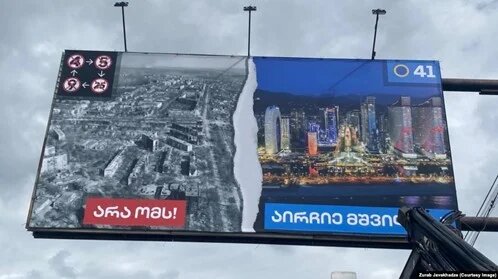
The tendency to subordinate the concept of peace to partisan interests is a long-standing feature of the Georgian political landscape. Over the last twenty-five years, successive governing bodies and political actors have instrumentalized conflict-related issues to accumulate political capital. As a result of this persistent profanation and debasement, the term has been hollowed out, losing much of its inherent significance. Paradoxically, given its history of civil strife in the 1990s and the 2008 war with Russia, Georgia is a nation where the conversation around peace ought to be approached with the utmost prudence and depth.
Against a backdrop of unaddressed psychological trauma and material loss, and amidst escalating security risks, the conceptualization of peace and the formulation of a coherent peace policy must become a primary objective for both the state and society. At this critical juncture, a consensus is required regarding the substance of the peace agenda; specifically, we must ask whether it is possible to construct a new conceptual framework for peace in Georgia.
Peace as a Transformative Process
While a definitive conceptualization of peace remains elusive, there is a broad consensus that the mere absence of war does not mean peace. Scholars and practitioners increasingly view peace as a dynamic, ongoing process of pursuing economic and social justice, equality, security, and liberty. It embodies the ideal of a just and secure society – one that is fundamentally free from, and resilient in opposition to, fear, violence, and oppression.[1]
In this light, peace is understood as an inherently transformative process. On the one hand, it involves cultivating new relationships and institutional frameworks between conflict-affected societies that enable dignified coexistence; on the other, it entails dismantling violent and oppressive structures to establish a more equitable and just social order.
Academic literature draws a distinction with a narrower conceptualization known as ‘negative peace.’ This term denotes a state characterized solely by the absence of direct physical violence or armed hostilities, often secured through ceasefire agreements or the presence of peacekeeping missions. However, such a condition is not synonymous with sustainable peace, as the underlying drivers of conflict and the potential for a resurgence of violence remain unaddressed. Consequently, genuine peacebuilding must encompass the transformation of relationships, attitudes, and entrenched structural and cultural foundations, thereby enabling societies fractured by crisis and conflict to achieve authentic coexistence and reconciliation.[2]This condition is conceptualized as ‘positive peace.’ Its attainment necessitates a range of mechanisms, including formal dialogue, negotiation, and mediation; mutual acknowledgment and recognition of perpetuated harm and experienced trauma; restoration of justice; democratic participation and social equality; and transformation of radical or violent narratives and discourses.
When we speak of dismantling oppressive structures, we refer to the social institutions and cultural characteristics, such as the state, bureaucracy, economy, education, religion and culture, and even family units, which perpetuate oppression and violence. Within this framework, poverty is conceptualized as a form of structural violence that breeds inequality, oppression, and, by extension, conflict. Similarly, a state apparatus that privileges a specific ethnic, religious, or racial group while marginalizing others, as seen in systems of apartheid, is inherently violent, unequal/inequitable, and serves as a primary catalyst for conflict. Following this logic, patriarchal family structures that confine women to reproductive roles are inherently oppressive and violent, and breed conflict. Consequently, peacebuilding is fundamentally a pursuit of justice and the emancipation of social relations from these systems of dominance. Authentic security requires more than the absence of war; it demands the comprehensive dismantling of inequitable social relations.[3]
In this regard, feminist perspectives provide vital analytical depth. Feminist scholars argue that militarism, patriarchy, and nationalism constitute an inextricably linked triad of social structures and discourses, fostering a culture of violence that serves as a precursor to conflict. As Cynthia Cockburn, a feminist scholar, observes, “Nationalism’s in love with patriarchy because patriarchy offers it women who’ll breed true little patriots. Militarism’s in love with patriarchy because its women offer up their sons to be soldiers. Patriarchy’s in love with nationalism and militarism because they produce unambiguously masculine men.”[4]
The 2022 study “Everyday Peace Indicators”[5] provides compelling empirical support for the theoretical framework proposed in this article. Findings from this research suggest that the population in conflict-affected Georgia envisions a significantly broader conceptualization of peace. When asked “What does peace mean to you?” respondents across Tbilisi, Gori, Akhalgori, Tskhinvali, Zugdidi, Gali, and Sokhumi identified various attitudes, institutions, and structures integral to a peaceful society. These included societal harmony (Sokhumi); civic equality (Gali, Tbilisi); dignified income (Zugdidi); sense of justice (Gori); freedom of expression (Gali, Gori, Tskhinvali, Akhalgori, Tbilisi); access to education (Gali, Sokhumi, Zugdidi, Tskhinvali); security (Tskhinvali, Gori, Gali, Sokhumi), etc. Such findings[6] underscore that a comprehensive understanding of peace – one that transcends mere absence of war – has firmly taken root within Georgian society.
Georgia is an ethnically and religiously pluralistic nation, with 20% of its territory currently under Russian occupation. Over the past three decades, political instability, economic hardship, and deep-seated polarization have become embedded in both public and private life. Against the backdrop of these protracted crises and conflicts, imagining peace in practical terms might appear inconceivable. Nevertheless, amidst the current crisis and the shifting international landscape, Georgia must articulate a coherent conceptual framework for peace and a transformative vision for its realization.
Security, Freedom, and Peace in Georgia
Official Georgian state documents and strategic frameworks notably lack a formal definition of what constitutes peace for the country. While experts and analysts typically frame the discourse around the Russo-Georgian war or relations with occupied territories, peace in Georgia is more accurately understood as a triad of interdependent and concurrent pillars. These components must be viewed holistically: first, the provision of societal security and the enhancement of social resilience; second, the fostering of prospects for peaceful coexistence with the Abkhazian and Ossetian communities; and third, the overcoming of violent social relationships and internal divisions. Each of these elements is equally vital to the attainment of a comprehensive and sustainable peace.
Societal Security and Resilience
In an era of global volatility and geopolitical ambiguity, Georgia’s national security faces mounting pressure and increasingly complex challenges. These threats have evolved significantly, extending far beyond the realm of conventional armed aggression. Such a shifting security landscape necessitates that Georgia adopt a more holistic and innovative strategic approach. Globally, very few nations can offer a 100% security guarantee to their citizens; however, they all attempt to reach higher percentages, a goal that, for small states like Georgia, can be achieved through internal resilience and robust international alliances.
The threats emanating from Russia toward Georgia are manifold, encompassing territorial occupation, ‘borderization,’ and the persistent potential for further destabilization; Russian information and influence operations present a critical challenge to Georgia’s sovereignty. The repercussions of these efforts are increasingly discernible: anti-Western sentiment has intensified, the scope and influence of nationalist-conservative factions are expanding, and a pervasive sense of disillusionment, hopelessness, and lack of security has taken root among citizens.[7]
In the wake of Russia’s invasion of Ukraine, Georgia has undergone a fundamental realignment of its foreign and security policies. Owing to the government’s current trajectory, the state now finds itself increasingly isolated from Western partners, with the Euro-Atlantic integration process effectively stalled, and its network of strategic allies nonexistent. Furthermore, emerging partnerships with actors such as China and the United Arab Emirates offer little in the way of a viable strategic counterbalance to Russian influence. Instead, these alignments with authoritarian regimes have accelerated the consolidation of illiberal governance within Georgia: a trend marked by the erosion of civil liberties, gross human rights violations and the curtailment of freedoms, a deepening asymmetric dependence on Russia for economic and energy resources, etc. It is increasingly evident that the current policy agenda of the Georgian Dream may prove self-defeating; the very ‘peace’ promised by the ruling party now risks compromising Georgia’s national sovereignty and derailing its developmental trajectory.
To safeguard its citizens, Georgia’s paramount objective must be the mitigation of security threats emanating from Russia and the reduction of risks related to the further annexation of its occupied territories. This necessitates a comprehensive strategy and operational framework dedicated to the analysis, management, and mitigation of Russia-originated risks. Such a framework should prioritize preventing a full-scale military intervention from Russia; reducing asymmetric economic dependence and the prevalence of Russian capital; expunging malign influence on strategic infrastructure and information technologies;[8] and insulating the citizenry against Russian propaganda and authoritarian governance models, etc. Achieving these goals rests on two premises: an appropriately prepared public sector, and the cultivated readiness and resilience of the nation’s citizens and businesses.
In the Georgian context, security entails more than just effective protection against potential threats or harmful influences; it requires the capacity to prevent, control, and reverse such damage.[9] Accordingly, this conceptualization of security bridges proactive preparedness with reactive remediation and the restoration of societal functions. This framework, termed ‘societal security’, is deeply embedded in the Nordic states and is currently being adopted across the Baltic region. Societal security implies increasing public participation in both protection and recovery efforts through civil defence, rapid crisis response, information resilience, and/or the empowerment of local self-government.
In periods of geopolitical upheaval, a policy of balancing may seem justifiable for small states; however, in the absence of robust alliances or partnerships with major powers, such a strategy leaves Georgia precariously vulnerable. This approach will place its sovereignty, security, and regional standing under higher risk. Consequently, it is an imperative of national security that Georgia resume its trajectory toward European integration and actively contribute to the emerging European security architecture. This must be accompanied by the revitalization of regional and bilateral alliances, including but not limited to the South Caucasus+Turkey format, Black Sea security initiative and political-security partnerships with the Baltic and Nordic states. Leveraging its position at the crossroads of Europe and Asia, Georgia holds significant potential in transport, trade, and energy transit. While bilateral political or economic relations with emerging partners such as China and India are essential, these engagements must be guided by the protection of Georgia’s national interests and security.
Relations and Peaceful Coexistence with Abkhazians and Ossetians
Decades of armed conflict, Russian occupation, and a protracted state of crisis have profoundly impacted the populations of Abkhazia and South Ossetia/Tskhinvali region. Life in these regions is defined by crumbling infrastructure, economic deprivation and hardship, corruption, and a pervasive lack of prospects, conditions further strained by Moscow’s political pressure and economic expansion. Furthermore, the ethnic Georgian population remaining in these occupied areas faces a dual vulnerability and discrimination.
Moreover, Russia’s invasion of Ukraine has intensified dissatisfaction and apprehension among the populations of these regions toward Russia, which increasingly relies on coercive measures to maintain total control. Shared Georgian-Abkhazian and Georgian-Ossetian interests are becoming more apparent, particularly in curbing the dominance of Russian capital, outlawing the sale of local real estate/property rights to foreigners, preserving cultural identity, ending the international isolation of these territories and their further integration into the external world. Georgia’s European integration process offers a unique framework for realizing and sustaining these objectives. Since residents of the occupied territories are legally recognized as Georgian citizens, it is in the Georgian national interest to foster their security, socio-economic empowerment, and ensure trust in the Georgian state as a reliable guarantor of their needs and interests. Georgia’s peace policy must be based on the rights, security, and social well-being of the populations within the occupied territories. Furthermore, the Georgian state should be predictable for its Abkhaz and Ossetian citizens: They must know what to expect from the country and from society. They need to know what awaits them from the state and society alike. Is it hatred, threats, isolation, and oppression? Or is it a welfare state based on the rule of law, in which they are protected? And, how are we supposed to share our vision if we lack direct political and public dialogue with them?
More precisely, Georgia’s peace policy should be centered around the principle of deisolation of the occupied regions. This entails fostering international engagement and cooperation with these regions, expanding access to international education for the youth, establishing robust social safety nets for local inhabitants, and facilitating freedom of movement and commercial exchange across the dividing lines. Furthermore, Tbilisi should strive to protect and improve the human rights of these populations, bolstering the role and capacity of civil society, and dismantling the entrenched social hierarchies and inequalities that marginalize various ethnic, religious, and cultural groups.
European integration must be an important part of the peace process. Georgia needs to present a credible and compelling alternative to those residing in the occupied territories by contrasting Russia’s isolation and democratic regression with a progressive, European-aligned Georgia – one that offers guarantees of security, human rights protection, and social development to Abkhazians and Ossetians on equal footing with all other citizens. Tbilisi should understand European integration as a pivotal catalyst for positive political and societal transformation. Europeanization holds the potential to positively realign the strategic calculations and political will of both de facto and de jure authorities. Simultaneously, it can facilitate a normative shift in societal values and behavior – one that excludes violent conflict resolution in favor of a culture of dialogue and compromise. By institutionalizing guarantees for equality, human rights, and social justice, this process makes it possible to cultivate trust, peaceful coexistence, and reconciliation between conflict-divided societies, even in the face of a politically unresolved conflict.[10]
Liberty and Social Justice at Home
Discourses on peace in Georgia frequently foreground conflict-affected populations and internally displaced persons (IDPs) who endure protracted poverty and existential uncertainty. Three decades after the cessation of initial hostilities, IDPs still face recurrent forced evictions from temporary shelters conducted by law enforcement agencies.[11] Furthermore, populations residing along the occupation line remain unable to meet fundamental daily necessities – a deprivation that drives outward migration. This is evidenced by the 33% decline in the population adjacent to the administrative boundary line (ABL) with the Tskhinvali region between 2002 and 2014.[12] Along the occupation lines of Abkhazia and South Ossetia, thousands have been detained in operations frequently characterized by documented instances of physical assault, ill-treatment, and torture. The installation of barbed wire fences and the ongoing process of ‘borderization’ have resulted in the loss of residential property and restricted access to agricultural land, ancestral graveyards, and the practice of traditional cultural and religious rites. Primary education in the mother tongue (Georgian) was prohibited within the occupied districts of Gali and Akhalgori.
Furthermore, Georgian society is characterized by pervasive fragmentation and splintering. Beyond the protracted political conflicts involving Abkhazians and Ossetians, the populace is increasingly stratified along estranged ethnic and religious lines – a divide compounded by the resurgence of nationalist, right-wing forces and the conservative ideological posture of the government. Simultaneously, society is becoming increasingly stratified along socio-economic lines; these disparities continue to widen, driven by regressive social policies, systemic corruption, and a political apparatus largely subordinated to corporate interests. For instance, profound inequities persist regarding educational access for urban versus rural students, ethnic majorities versus minorities, and those within the private versus public systems.[13] Social cohesion is further undermined by generational rifts, which are exacerbated by official rhetoric – a salient example is the divisive and confrontational discourse targeting the younger generation.[14]Ultimately, the dehumanization of political adversaries and the implicit endorsement of violence have emerged as normalized features of the contemporary political landscape.
It is evident that authoritarian and oligarchic regimes lack any inherent inclination toward fostering justice and equality; on the contrary, they consolidate power through the systematic perpetuation of injustice and inequality. All this feeds into a deep social crisis, fragmentation, and societal conflict.
Against this backdrop, the prevailing sense of demoralization, disillusionment, and inaction within Georgian society is unsurprising. Existing power and social structures reinforce a feeling of powerlessness, instilling a pervasive sense of insignificance. Consequently, the citizenry often feels excluded from political or peacebuilding efforts, viewing systemic oppression as an inescapable reality.
Collectively, these observations suggest that the discourse surrounding peace in Georgia is less a pursuit of stability and more an exercise in political instrumentalization. It is impossible to speak of peace without the rights to freedom of expression and organization; it is impossible to speak of peace against the backdrop of economic despair for a vast portion of society, for whom political participation is a luxury. It is impossible to speak of peace where society and the political system marginalize and exclude non-dominant ethnic and religious groups. There can be no peace in a country where public goods and spaces are accessible only to a select few, while the majority remains politically alienated, socially excluded and increasingly desperate.
The realization of genuine peace in Georgia is predicated upon the establishment of a genuine democracy – one driven by a robust citizenry engaged in the direct and continuous exercise of governance. Georgia needs a social welfare state committed to social justice, wealth redistribution, and the economic empowerment of the populace. Furthermore, such a peace requires the cultivation of institutional resilience through a strong civil society, a pluralistic media landscape and independent, accountable state institutions. Ultimately, for a country like Georgia, the eradication of oppressive social practices, promotion of equality, and attainment of social justice are not merely goals, but indispensable prerequisites for a sustainable peace.
Envisioning Peace
Peace is a lengthy, painful, and inherently democratic process centered on the pursuit of equality, justice, and social justice, alongside the strengthening of democratic institutions and social cohesion. Georgia must formulate a novel, multidimensional conceptualization of peace, translated into far-reaching and transformative policies. This framework must be predicated on bolstering security and societal resilience in the face of persistent Russian aggression, occupation, and the looming threat of annexation. Furthermore, internal social equality, economic justice, and direct democracy should constitute the core of this framework; such progress would, in turn, position Georgia as a credible and compelling alternative for the estranged Abkhazian and Ossetian citizens, ultimately facilitating the restoration of their trust in the Georgian state.
Though we might find it difficult to conceptualize peace – given that conflict is often viewed as an inherent feature of the human condition – the pursuit of peace is a tangible and attainable objective. It constitutes a perpetual political and societal process in which a pluralistic array of actors – including politicians, educators, activists, lecturers/professors, artists, the clergy, community organizations, business circles and other groups – collectively strengthen the social fabric. This is achieved through a commitment to dialogue, democratic deliberation, solidarity, and empathy. Because peace is cultivated within strong political institutions, educational spaces, and free public and media spaces, with every member of society serving as its active co-creator.
The Content of the article is the sole responsibility of the author and can in no way be taken to reflect the views of the Heinrich Boell Foundation Tbilisi Office – South Caucasus Region.